
Inquisitor Labs is always asking what comes next in the development of AI systems. We strive to make current systems more capable, and we actively design the next generation of architectures and components that will supersede many of those available today.
We design revolutionary systems at the architectural level. We challenge anyone to build them.
Our work typically consists of two papers: an Architectural Specification and a Technical Specification. We define the behaviour, structure, and expectations of a system, and leave the implementation to anyone willing to take it on.
If you can build it, build it.
Inquisitor Labs works at the systems architecture level. We define how a system should behave, not how to code it. A sufficiently competent developer or development team should be able to build a working system from our designs.
Our concepts sit above any specific operating system or framework, so they can be adopted, adapted, and implemented in many runtime environments.
Here you will find Open Use and Open Build resources developed exclusively by us. These resources are unique at the time of publication and offer significant development and commercial opportunities, as well as less tangible benefits for those who can successfully integrate them into wider systems.
To understand how to use our specifications, read our General Specification Usage Guide.
We are open to collaboration. Architectural discussion and joint commercial ventures are welcome. We do not provide support for system specific issues such as coding, documentation, troubleshooting, or tech support, and especially not on an ad hoc basis.
Open Use and Open Build describe a publishing model where architectural and technical specifications are made available for anyone to study, develop, and build upon. These specifications are system agnostic and do not depend on any particular model, operating system, coding language, or runtime environment.
Documents that include their own licence operate under those terms. Where a document is published without an explicit licence, the Apache 2.0 licence applies by default. Apache 2.0 permits free use, modification, distribution, and commercial implementation, requires attribution and preservation of notices, includes an explicit patent licence, and contains a patent retaliation clause to prevent misuse.
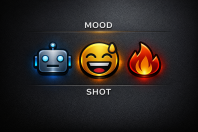
Imagine adjusting how a local LLM behaves with the simplicity of moving a slider. Interaction style becomes a user defined parameter rather than a hidden internal state. Explicit, transparent, and reversible.
MOOD SHOT provides deterministic, user controlled persona modulation for local and potentially distributed LLMs. It uses operator defined mappings and a minimal slider interface to expose behaviour shaping as a clear, inspectable mechanism.
Instead of guessing how the model will respond, you set the behaviour directly. Instead of a small fixed selection, you get a range.
Mood Shot Architecture Specification (PDF)
Mood Shot Technical Specification (PDF)